Cyprus Electricity Prices Rise 27%: From €0.26/kWh in May to €0.33 in October
The average residential electricity price in Cyprus reportedly rose from about €0.26/kWh in May to €0.33 in October 2026. Here is what that means if you are considering solar.
Cyprus Energy Update | October 2026
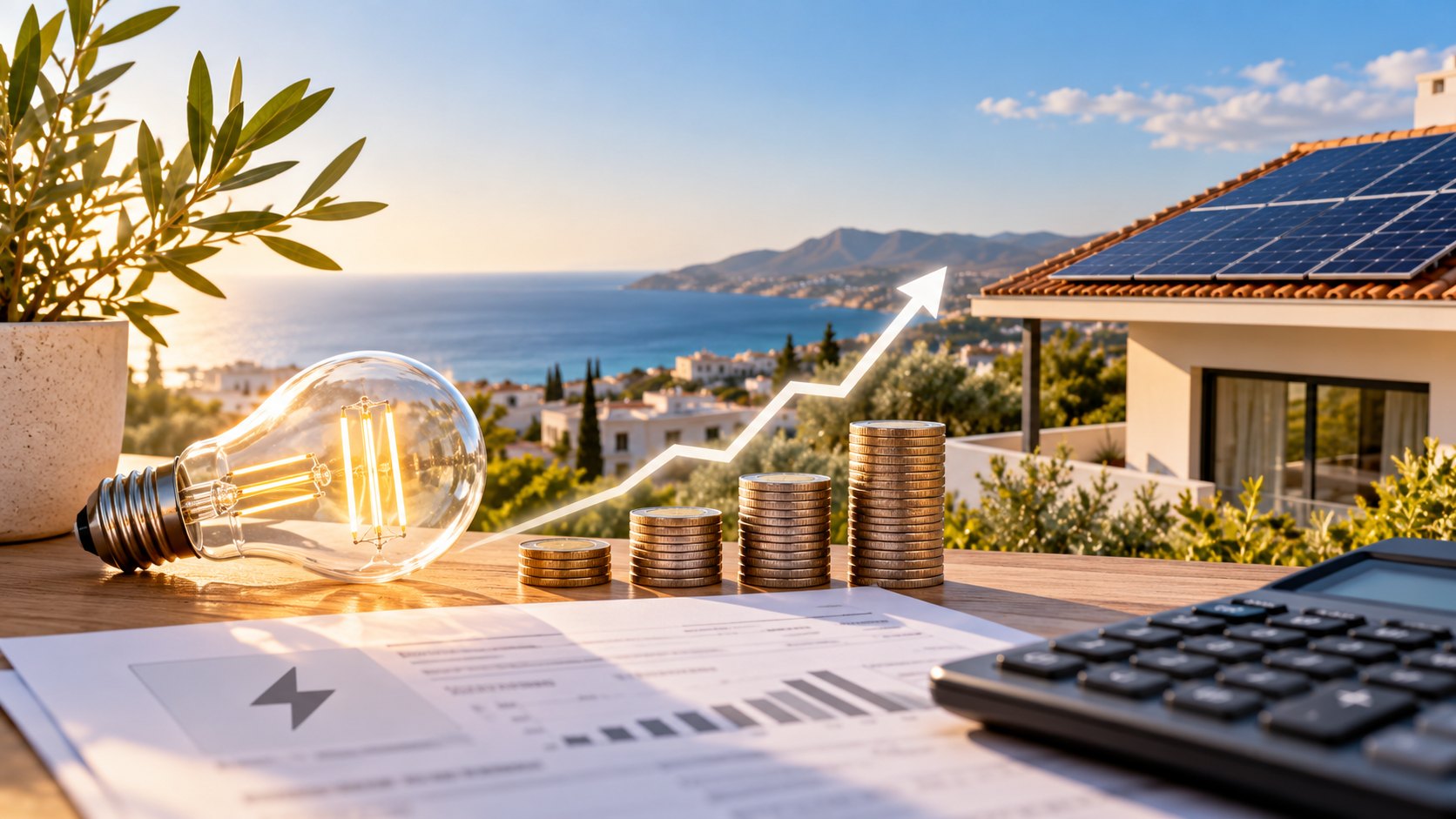
Electricity prices rise as fuel costs increase
Electricity prices in Cyprus have risen significantly in recent months, adding further pressure to household budgets.
According to a report published by Politis on 21 October 2026, the average residential electricity price increased from approximately €0.26 per kilowatt-hour in May to €0.33 in October, including VAT. This represents an increase of around 27%.
The report attributes the increase primarily to higher fuel costs and the exhaustion of fuel supplies and carbon-emission allowances previously purchased at lower prices, according to the Electricity Authority of Cyprus (EAC).
The development highlights Cyprus's exposure to international energy-market fluctuations and the importance of managing electricity consumption more efficiently.
What does this mean for households?
When electricity becomes more expensive, generating and using your own solar electricity can become more valuable. However, the actual benefit depends on household consumption, grid-connection conditions and how surplus generation is managed.
Source: Politis, 21 October 2026. These are reported indicative figures and may not reflect every household's effective electricity cost.
What does this mean if you are considering solar?
Higher electricity prices increase the importance of self-consumption. However, before investing in solar, there is an important factor to check.
Not every new solar installation can automatically export surplus electricity to the grid.
In areas where the network faces capacity constraints, specific connection conditions may apply, including zero-export requirements.
1. Check your property's grid-connection conditions
Ask your installer to verify the current requirements for your property with the Electricity Authority of Cyprus (EAC) Distribution System Operator (DSO).
Confirm whether exports are permitted, whether export limits apply and whether a zero-export configuration is required. Request written confirmation before signing an installation contract.
2. Prioritise self-consumption
Self-consumption means using the electricity your panels generate directly in your home or business.
Running appliances, air conditioning, pool pumps and other significant electrical loads during periods of solar production can help you use more of your generated electricity.
Where export restrictions apply, matching solar production to daytime consumption becomes even more important.
3. Evaluate whether battery storage makes sense
A battery can store some surplus daytime generation for use later, including in the evening.
However, it represents an additional investment. Its financial value depends on the purchase and installation cost, usable capacity, consumption patterns and the savings it can realistically deliver.
Ask for a calculation based on your actual electricity bills rather than assuming that a battery will automatically pay for itself.
4. Choose the right system size
A larger photovoltaic system does not necessarily deliver greater savings, particularly if some of its potential production cannot be used or exported.
Before deciding on system capacity, review your electricity consumption, when you use the most energy and the connection conditions applicable to your property.
What if you already have solar panels?
If you already operate a photovoltaic system, review your electricity bills and assess how much of your generated electricity you consume directly.
If you are considering adding a battery or expanding your installation, check whether the proposed changes require additional approval and whether they affect your existing grid-connection conditions.
Restrictions reported for new installations do not automatically apply in the same way to every existing system.
The bottom line
The recent increase in electricity prices highlights Cyprus's continued exposure to international fuel costs.
Solar energy can help households and businesses reduce their reliance on purchased electricity. However, the financial outcome depends on consumption patterns, self-consumption, storage options and grid-connection conditions.
Before investing in solar, find out what your property can connect to, what you can use and what you can export.
At Eletoyia Group, we believe that good energy decisions start with understanding actual consumption and evaluating solutions against realistic financial assumptions.
This article is for general information and does not guarantee grid access, export permission or financial returns. Tariffs, connection conditions and applicable regulations may change.
#Cyprus #SolarEnergy #ElectricityPrices #SolarPanels #EnergyStorage #EletoyiaGroup