Cyprus Moves Ahead With Major Battery Storage Projects at Dhekelia and Moni
The EAC is moving ahead with 180 MW / 360 MWh of battery storage at Dhekelia and Moni. Here is what is planned, and what it means for solar owners in Cyprus.
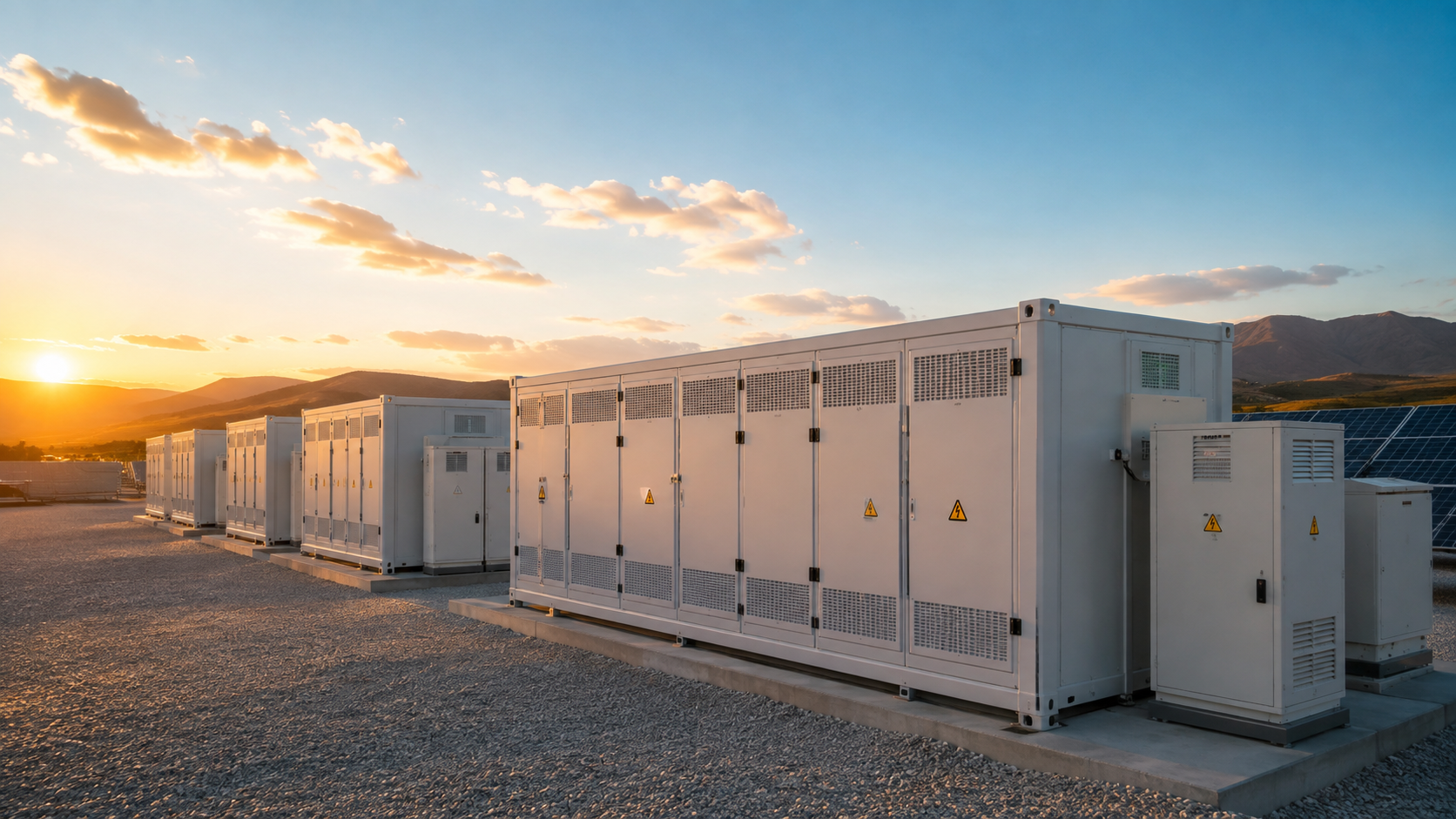
Cyprus is taking another important step towards addressing one of the biggest challenges created by the rapid growth of solar power: how to store and use renewable electricity when the grid cannot absorb it immediately.
The Electricity Authority of Cyprus, EAC, is moving ahead with major battery energy storage projects at its Dhekelia and Moni power stations, with a combined planned capacity of 180 MW and 360 MWh. The projects are intended to reduce the amount of renewable electricity that is lost during periods of high production. (Cyprus Mail)
For a country with rapidly increasing photovoltaic capacity, this is an important development.
Why does Cyprus need large-scale storage?
Solar generation is strongest during the middle of the day, when electricity demand does not always reach its highest levels. As more photovoltaic systems have been connected to the Cypriot grid, the gap between solar production and available demand has become increasingly difficult to manage.
When there is more renewable electricity available than the system can safely absorb, the grid operator may need to reduce renewable generation. This is known as curtailment.
The scale of the issue has increased significantly. Around 306 GWh of renewable electricity was curtailed in Cyprus during 2025, according to figures reported earlier this year. (Cyprus Mail)
This creates a fundamental challenge for Cyprus. Adding more solar generation is only part of the energy transition. The country also needs the infrastructure to store, transport and use that electricity efficiently.
That is where battery storage becomes important.
What is planned at Dhekelia?
The EAC's project at Dhekelia will provide an 80 MW battery system with 160 MWh of storage capacity.
The construction contract, valued at approximately €33.7 million, was signed in February. According to the EAC, the system is expected to enter operation in September 2027. (Cyprus Mail)
The battery will not generate electricity itself. Instead, it will provide flexibility to the electricity system by storing electricity when it is available and making that energy available later when required.
This can be particularly valuable for renewable generation, as electricity produced by solar installations during periods of excess production can potentially be stored rather than curtailed.
What about Moni?
The planned storage system at Moni will be even larger, with 100 MW of power capacity and 200 MWh of storage capacity.
The project has already received a construction permit from the Cyprus Energy Regulatory Authority, CERA. However, it remains at an earlier stage than Dhekelia. EAC has submitted an application for grid connection terms, while environmental and planning processes are still progressing. (Cyprus Mail)
The EAC currently estimates the cost of the Moni project at around €50 million, with construction expected to take approximately one year once it begins.
This means the two projects should not be viewed as immediate solutions to Cyprus's curtailment problem. They are part of a longer infrastructure programme that will take time to deliver.
What does this mean for solar owners?
For homeowners and businesses with photovoltaic systems, the most important point is that more battery storage should ultimately make the electricity system better able to accommodate solar generation.
When storage is available, surplus electricity generated during periods of high solar production can potentially be shifted towards periods of higher demand.
That could help reduce curtailment and improve the overall utilisation of renewable energy.
However, solar owners should not assume that the new EAC projects will eliminate curtailment in the short term. The Dhekelia system is not expected to be operational until 2027, while Moni is still progressing through the necessary approvals.
Until sufficient storage and grid capacity are available, curtailment will remain an important consideration for Cyprus's solar sector.
Storage is becoming a central part of Cyprus's solar future
The significance of the Dhekelia and Moni projects goes beyond the individual batteries.
Cyprus has already invested heavily in photovoltaic generation. The next challenge is ensuring that the electricity produced by those systems can be used effectively.
This requires a combination of battery storage, stronger grid infrastructure, improved system management and greater flexibility in electricity consumption.
Large-scale batteries can provide several benefits to the electricity system, including storing surplus renewable generation, supporting system stability and helping match electricity supply with demand. Previous EAC statements have also highlighted the role of storage in reducing curtailment and improving operational flexibility. (Cyprus Mail)
The direction of travel is therefore becoming increasingly clear.
Cyprus does not simply need more solar panels. It needs the infrastructure that allows the electricity produced by those panels to deliver its full value.
The planned 180 MW / 360 MWh of storage at Dhekelia and Moni is an important step in that direction. It will not solve the country's energy challenges overnight, but it represents meaningful progress towards a more flexible electricity system and a future where more of Cyprus's abundant solar energy can actually be used.
At Eletoyia, we will continue monitoring how storage, grid investment and changes in Cyprus's electricity market affect the economics and performance of solar systems for households and businesses.