
Why 2026 Is the Best Year to Go Solar in Cyprus
Electricity prices, EAC net-billing rules and equipment costs have all shifted in 2026. Here is what a Cypriot homeowner needs to know before signing a PV contract.
How much does electricity actually cost in Cyprus right now?
Cyprus continues to have one of the highest residential electricity prices in the European Union. According to the Electricity Authority of Cyprus (EAC) tariff schedule, the effective all-in price a household pays, including energy charge, network charges, VAT, and fuel/RES adjustment, routinely sits between €0.28 and €0.34 per kWh in 2026. A family with a 5,000 kWh annual consumption is therefore looking at a bill in the region of €1,500–€1,700 every year, before any air-conditioning-heavy summer months are counted.
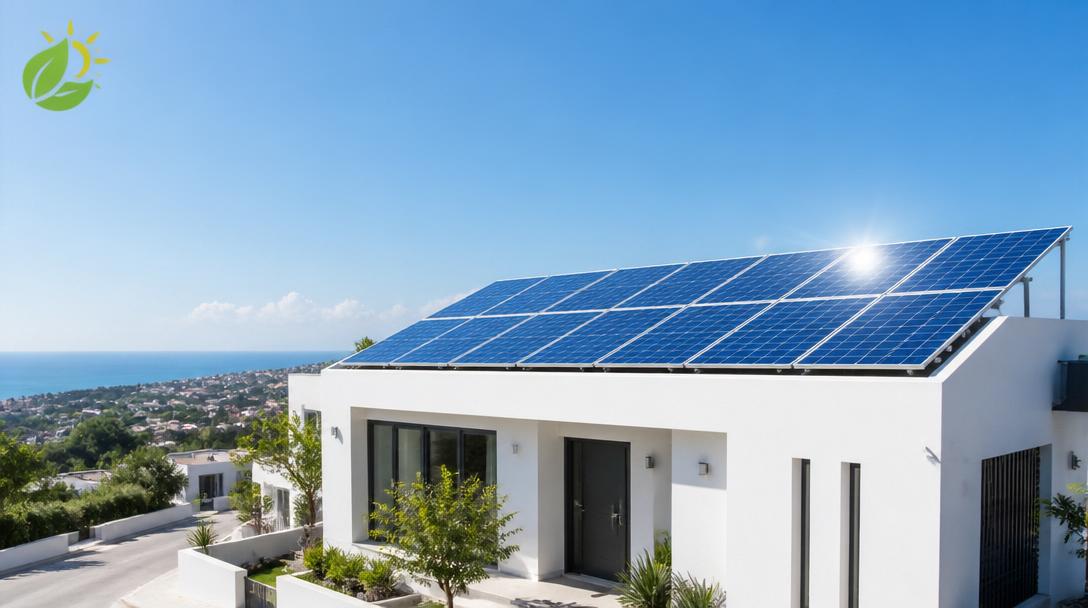
Against that backdrop, a 5 kWp rooftop PV system in Cyprus produces roughly 8,000–8,500 kWh per year, more than the average household consumes, because Cyprus enjoys around 300 sunny days annually. That's the single biggest reason solar economics keep improving faster here than almost anywhere else in the EU.
What has actually changed in 2026?
Three things moved this year and all of them favour homeowners:
- Grant scheme renewed. The Ministry of Energy, Commerce and Industry continues to run subsidy schemes for residential PV and battery storage. Vulnerable-consumer households qualify for the largest grants; general households receive smaller but still meaningful support.
- Net billing is the default. Under the CERA framework administered through EAC, new residential systems settle exported energy at a wholesale reference price rather than 1:1 offsetting. That makes self-consumption, and therefore batteries, much more important than under the old net-metering regime.
- Panel and inverter prices are down. A high-efficiency Tier-1 module now retails at roughly €0.16–€0.19 per Wp; three years ago the same panel sat above €0.30/Wp. Hybrid inverters have followed the same curve.
What is the payback period today?
| System size | Typical install cost (2026) | Annual savings | Simple payback |
|---|---|---|---|
| 3 kWp | €4,200–€4,800 | €900–€1,100 | 4–5 years |
| 5 kWp | €6,200–€7,200 | €1,400–€1,700 | 4–5 years |
| 8 kWp + 10 kWh battery | €14,000–€16,500 | €2,400–€2,900 | 6–7 years |
Panel manufacturers warrant 25–30 years of production. The payback maths above therefore represents four to seven years of investment followed by two decades of near-free electricity.
Should you add a battery in 2026?
Under net billing, every kWh you consume yourself is worth 2–3× more than a kWh you export. A 10 kWh lithium battery lifts self-consumption from about 30% to 70–80% for a typical Cypriot household, which is why we now recommend batteries in the majority of new residential quotes, especially where the customer has an EV or plans to buy one.
What about the grid connection wait?
The regulatory framework is documented at the Cyprus Energy Regulatory Authority. Grid connection times have improved in 2026 but still vary by locality. Assume 4–8 weeks from signed contract to switch-on for residential; more for commercial.
Bottom line
If you own your roof and pay an EAC bill, 2026 is the strongest year yet to go solar in Cyprus. Payback is inside five years for most homes, the equipment is mature, and the regulatory framework is stable. The one caveat: net billing rewards self-consumption, so size your system, and consider a battery, based on how you actually use power, not on the size of your roof.